



Bank Fraud
Resolution of bank fraud is included in the IDBeMe program
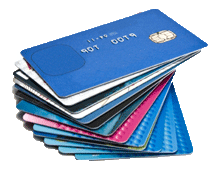
If your credit card has been lost or stolen, contact your credit card issuer immediately. The financial institution’s representative will request the following information, which will facilitate the cancellation of your card:
If you are not a customer and you suspect fraudulent activity within your bank accounts, please follow these steps in order to protect your accounts:
2 main types of bank fraud exist:
2 main types of bank fraud exist:
Credit card Identity theft
If your credit card has been lost or stolen, contact your credit card issuer immediately. The financial institution’s representative will request the following information, which will facilitate the cancellation of your card:
- Full credit card number of the card that is missing. If you are a secondary cardholder, you will also need to provide the primary cardholder’s identification verification details.
- Exact cardholder name as printed on the card.
- Billing address – where the credit card statement is sent each month.
- Your home phone number.
- Circumstances of the loss or theft.
- Identification verification information – Social Security number or similar, date of birth and mother’s maiden name.
After the card has been cancelled please request a copy of your credit report and place a “Fraud Alert” on your credit files. Fraud alerts can help prevent an identity thief from opening any more accounts in your name. Contact the toll-free fraud number of any of the three consumer reporting companies below to place a fraud alert on your credit report. You only need to contact one of the three companies to place an alert. The company you call is required to contact the other two, which will place an alert on their versions of your report, too.
Check fraud
Check fraud occurs when an identity thief steals or counterfeits checks. Criminals can easily:- Create checks with just a checking account number and the bank routing number. Therefore, checking account numbers are just valuable to criminals as credit card numbers and should be treated with similar care.
- Paper checks are very risky to use because they have the account number and bank routing number on them. Therefore, every person who handles a check has the ability to commit check fraud.
- Demand drafts, also known as "remotely created checks" are a system for cashing checks and have become an attractive target for criminals. They were designed to accommodate legitimate telemarketers who receive authorization from consumers to take money out of their checking accounts. They look just like checks, but indicate “signature not required” or a similar message in the authorized signature area. They require no action from the account holder. In most states, consumers who complain about a bad demand draft within a reasonable amount of time are entitled to a refund from their bank.
The liability for accepting a bad check falls to the account holder’s bank,
called the paying bank. But the rules only give the bank 24 hours after
receiving the check from the institution that cashed it to make
a fraud
determination. That makes the work
of
thieves easier since banks rushing to make quick judgements often don’t detect fraudulent demand drafts until a consumer complains, well after the 24-hour
period.
About identity theft

Fighting identity theft
for our customers
for our customers
SITEMAP
Protect yourself
Our offer features
What is identity theft?
Online fraud
Prevention tips
About EA USA
Privacy policy
Our offer features
What is identity theft?
Online fraud
Prevention tips
About EA USA
Privacy policy
Copyright © 2009 Europ Assistance USA